Intro: Tune Up Before You Play
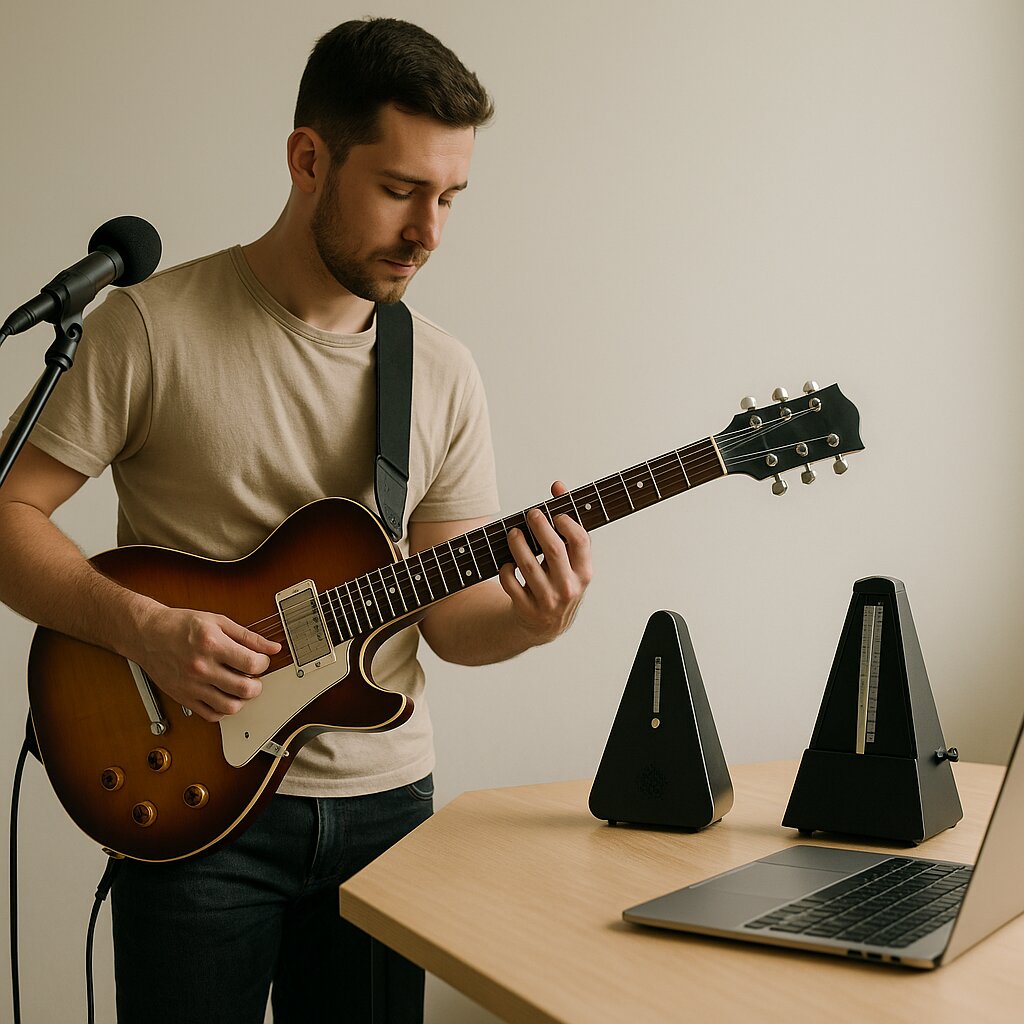
Think of starting a small business like recording a band demo: you don't need a perfect studio, just clear sound, a memorable hook, and a short set that shows what you do. This guide is a warm, practical day-by-day (one-day) template to produce a single experiment — your demo track — and the simplest funnel to test whether people hum along.
A demo that feels honest invites listeners to become fans and customers. Aim for clarity, not perfection.
What you'll get by the end of the day
- A short demo (one offering) that communicates your value — the "hook".
- A landing page mockup to collect early interest.
- A template email to ask a partner to feature or co-promote.
- AI prompts to sketch ideas and creative assets.
- A metronome sprint schedule, simple metrics, and a finishable checklist.
The core metaphor: songwriting as product discovery
Songwriting process = product discovery. Hook = value proposition. Arrangement = packaging. Mixdown = brand polish. Touring = early promotion. Keep it relational: your first customers are your first fans.
Quick outline of the day (the Metronome Sprint)
- 00:00–00:30 — Warm up: clarify the one thing (customer + promise).
- 00:30–02:00 — Compose the hook: 15–30 second value statement + offer.
- 02:00–04:00 — Rough demo: record a short audio or video showing the offer in use.
- 04:00–06:00 — Mixdown brand: write headline, short supporting bullets, hero image sketch.
- 06:00–07:30 — Landing page and CTA: build simple form and one conversion path.
- 07:30–08:30 — Partner outreach email and social copy draft.
- 08:30–09:30 — Small promotion run: 10 warm contacts, one micro-ad or boosted post, 2 partner asks.
- 09:30–10:00 — Measure and tune: check simple metrics and decide next step.
Step 1 — Warm up: Find your one clear note
Pick one customer and one problem. Keep it simple. Write it like a hook lyric.
- Customer: "busy freelance designer who needs quick paid templates"
- Problem: "spends 3 hours designing a landing page every week"
- Hook line: "Launch a landing page in 15 minutes — templates made for busy designers."
Exercise: Humming test (PMF micro-test)
Find 5 people in your target group and hum your hook out loud. If they can repeat it, or nod, you have resonance. Use short prompts to record their reactions (time-stamped): "Did that make sense? Would you try that?" Count affirmative reactions.
Step 2 — Compose the demo
Make a short, tangible demo that communicates the experience. It can be a 60-second screen-record, a voiceover+slide, or a simple video of you explaining and showing results.
- Structure: Intro (10s) — Hook (15s) — Showcase (25s) — CTA (10s).
- Keep audio clean: speak clearly, use a simple backing loop or ambient sound to keep rhythm.
How to make a demo feel real
- Show a quick before/after.
- Use a specific time metric ("15 minutes") or a tangible outcome ("first client booked").
- Include a human element — a face, a short quote, or a micro-case.
Hook-writing formula and examples
Formula: [Result] for [Customer] in [Timeframe or Simplicity Statement].
- Example 1: "Custom proposal templates for consultants — win clients in 30 minutes."
- Example 2: "Weekly meal plans for busy parents — 5 recipes in 20 minutes."
- Non-perfect idea example: "Design-as-a-Service for startups" (too vague; make it specific).
Step 3 — Landing page example (short)
Use this as a one-page mock to collect emails or pre-orders.
Hero
Headline: Launch a landing page in 15 minutes — templates for busy designers
Subhead: Pick a template, swap the copy, go live. No design hours needed.
- What you get: 5 starter templates + 1-minute setup guide
- Price/offer: Early access, $19 limited spots
CTA: Join the demo list (email field)
Step 4 — Email template to feature partner
Short, clear, and generous.
Subject: Quick collab idea — demo share for your audience?
Hi [Name],
I’m building a tiny product that helps [their audience] do [result] in [time]. We’re running a short demo day and I’d love to feature you with a co-promote: I’ll share a tailored template for your audience and mention your work in the demo. Would you be open to a 10-minute quick call or a short quote?
Thanks — [Your name] • [1-line why you care]
AI as a bandmate: prompts and cautions
Use AI to sketch, not to replace judgment. Ask it to generate multiple quick options, then pick and humanize.
- Prompt for hooks: "Write 10 one-line value propositions for a product that helps freelance designers launch pages in under 15 minutes."
- Prompt for landing copy: "Create a 3-sentence hero + 3 short bullets for the above value proposition."
- Prompt for social: "Write 5 short captions for an Instagram post announcing an early-access demo."
Caution: check factual claims, and avoid generic fluff. Keep voice true to you.
Simple metrics to track today
- Landing page conversion rate (emails / visitors)
- Demo watch rate (views / sent)
- Partner replies (yes / maybe / no)
- Humming test score (affirmatives / 5)
Mixdown your brand: cut, keep, polish
Treat your first outputs like a rough mix: remove anything that distracts from the hook. Keep one primary visual, one primary promise, and one CTA.
Short practice exercises (15–30 minutes each)
- Write 20 hook variations. Pick top 3 and test by humming to 5 people.
- Record a 60-second demo and edit to 45 seconds — cut unnecessary words.
- Draft a landing page headline + 3 bullets; ask a friend to read it out loud and note confusion.
Tour & promotion funnel (micro version)
Think of a mini-tour: one email to warm list, one partner feature, one social post, and one small targeted boost. Funnel sequence:
- Teaser social post with demo clip
- Landing page with email capture
- Email to signups with invite to limited demo
- Partner shout + shared clip
Setlist for the customer's concert-version
- Opening (hook): Short intro video
- Middle (value): Demo showing outcome
- Encore (trust): quick testimonial or behind-the-scenes
- Exit (CTA): join, buy, or book call
Copyright, revenue, and repeatability
Keep IP simple: document what you own (templates, audio, copy). For recurring revenue, think subscriptions for updates or bundles. Offer clear license terms for partners — e.g., "feature once with credit" vs "white-label for fee." Short written notes are enough for day-one agreements.
Shareable behind-the-scenes that sells
People buy the story. Share a quick clip of your process, a before/after screenshot, or a small problem you solved. Authenticity moves listeners.
AI prompts — ready to copy
- Hook ideas: "Write 12 one-line hooks for [product] aimed at [customer]. Keep them under 10 words."
- Landing hero: "Create a 2-sentence hero and 3 bullets for [hook]."
- Partner pitch: "Draft a brief, friendly outreach email to [partner type] proposing a co-promote."
- Social captions: "Write 6 short captions for an Instagram post showing a 45-second product demo."
Day-finish checklist — start making now
- Pick your customer + one promise (write the hook).
- Record a 45–60s demo following the structure above.
- Build a one-page landing mock (headline, bullets, email CTA).
- Send the partner email to 2 people and pitch 10 warm contacts your demo.
- Run humming tests with 5 target users and record responses.
- Measure: visitors, signups, demo views, partner replies; note next actions.
Final note — be a band that ships
Don’t wait for a perfect studio. The first demos teach you what your audience actually hums back. Ship a listenable, believable experiment today. Tune, play, record, and then ask — did they hum it back?
If you want, reuse the templates in this guide as a checklist and adapt the metronome sprint to two or three days — the rhythm matters more than the length.