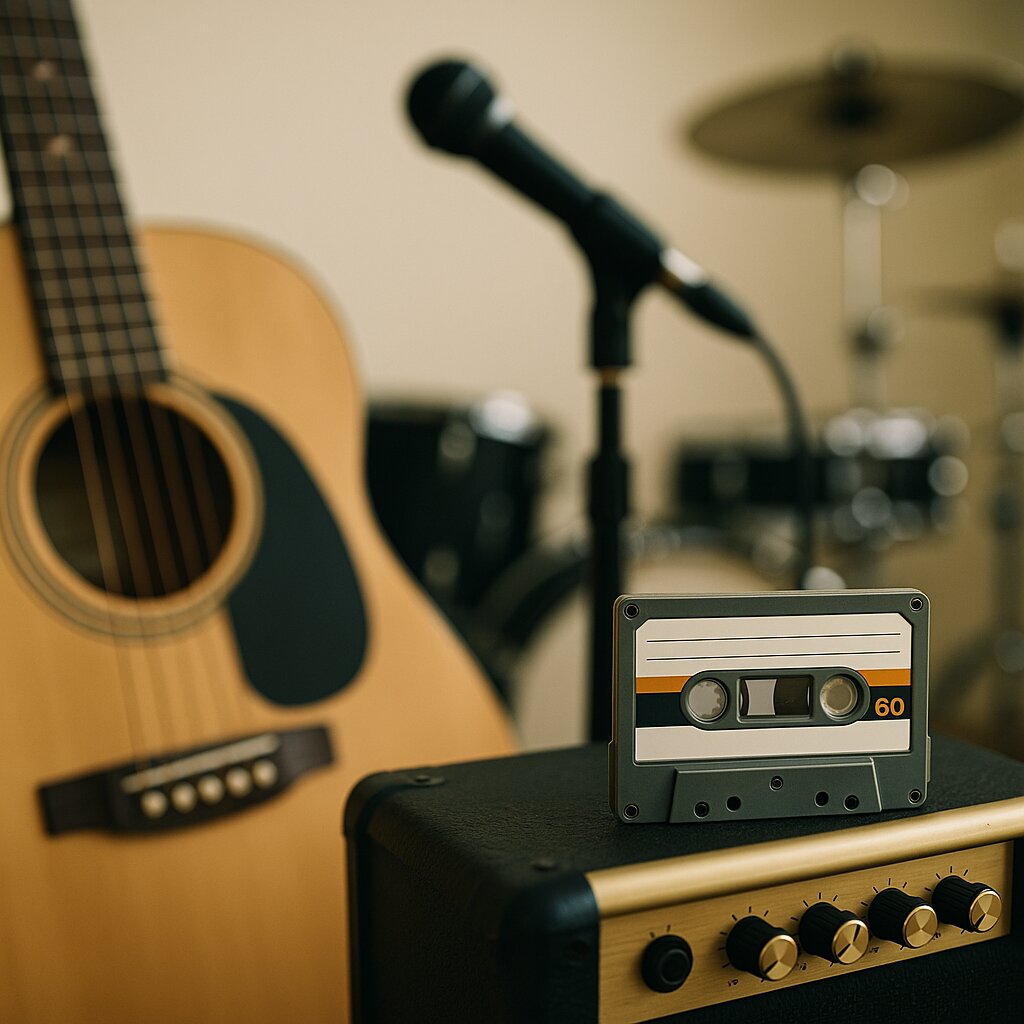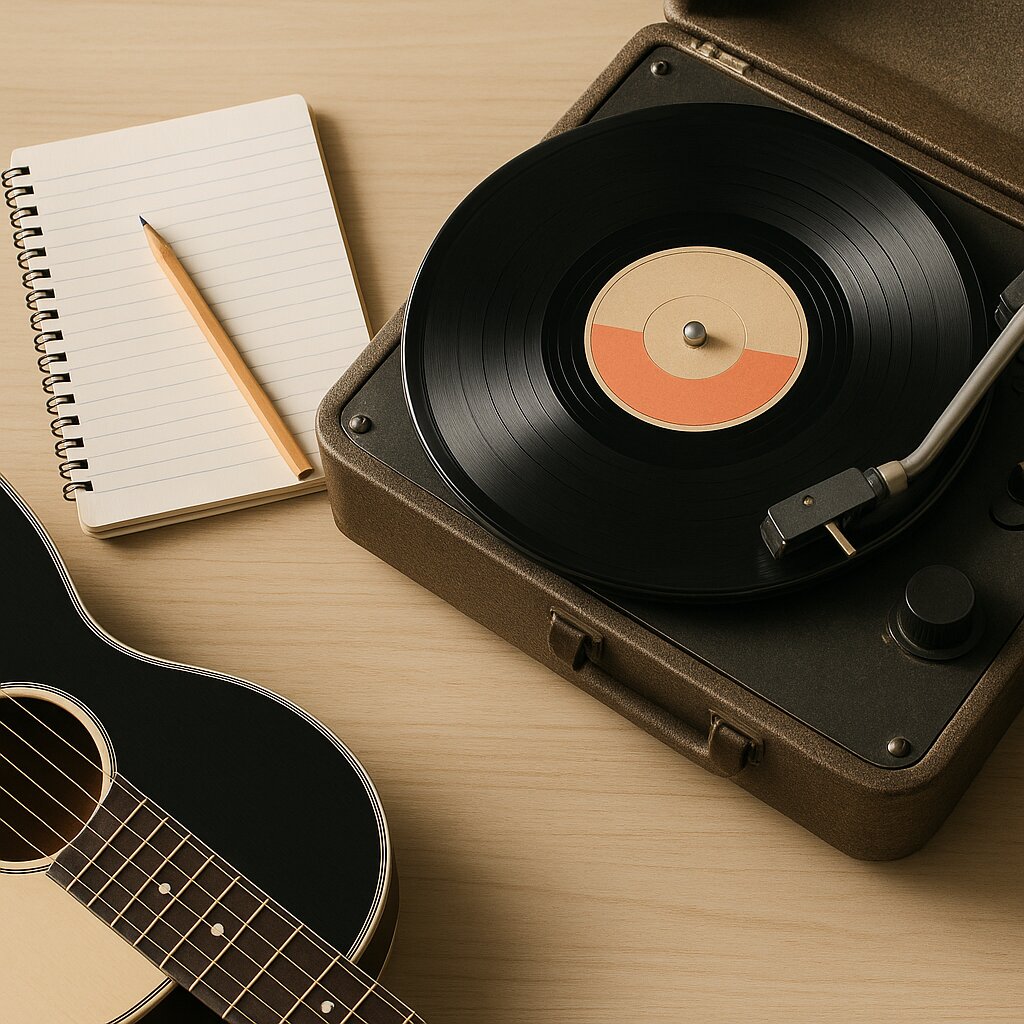
Intro — start small, like making a song
Starting a small startup can feel like staring at a blank page: the fear of wasting time, the pressure to be 'innovative', and the question of whether your age is an advantage or a problem. Think of it like making a vintage demo record: simple gear, a clear melody, and a reliable process. This article tells three short founder stories that use songwriting as a roadmap. By the end you'll have one small idea and a plan to build a live demo in a day.
"We didn't need a lot of lights. We needed a tune people remembered and a rhythm we could repeat." — a founder
Three short tales: founders who worked like a band
Tale 1: The Loop and the Lunchbox
Arune, 46, had a day job and a melody she hummed on the commute. Instead of waiting for 'perfect', she recorded a three-second loop on her phone and played it to two neighbors over tea. They loved the little loop and suggested a simple product — a weekly curated micro-playlist for local cafes. She built a landing page, recorded a 30-second demo, and had her first sign-ups in 48 hours. She treated feedback like adding layers to a loop: one instrument at a time.
Tale 2: The Analog Hook
Ben, 29, loved thrift-store synths and short stories about craft. He made a postcard-sized card product that paired a short audio clip (12 seconds) with a physical recipe card. Instead of chasing investors, he sold 20 through friends. Each sale was a tiny rehearsal: tweak the copy, simplify the checkout, adjust the price. His advantage was curiosity and low overhead — vintage charm sells when it's honest.
Tale 3: The Quiet Producer
Siri, 52, was cautious. She used a notebook like a songwriter uses a lyric pad: sketch, cross out, refine. Her project was a small service helping local makers record short product stories. She launched with a single sheet explaining the process and a simple demo. Her clients came from those who heard the demos in local networks; she scaled slowly and kept the work homey and repeatable.
Why age is an advantage
- Perspective: years of context help choose which idea to test.
- Networks: real people who will give honest feedback.
- Patience: the vintage path values slow, reliable polishing over hype.
From demo to MVP: a short checklist
- One clear hook: what do you offer in one sentence?
- One simple demo: 30–60 seconds of proof — audio, screenshot, or video.
- Landing page with a single call-to-action (signup, pre-order, or email).
- Two real people to give feedback within 48 hours.
- A way to measure interest (email clicks, signups, replies).
The vintage PMF check — the "Hum-Second" test
The Hum-Second test is a low-tech way to test product-market fit using sound and attention span. Sing or hum your product's core value in a single short phrase (3–8 seconds). If a stranger can hum it back or summarize it in a sentence after hearing it once, you likely have a clear hook.
How to run it:
- Write the 6–8 word core idea (the 'hook').
- Say it aloud, hum it, or record a 5-second clip.
- Play it to five people who are not your inner circle.
- Ask: "Can you hum that back or say what it does in one sentence?"
- If 3/5 reply clearly, iterate and record a better demo; if not, simplify the message.
Example Hum-Second hooks
- "Weekly cafe playlist, ready-to-play."
- "30-sec product stories for your shop."
- "Monthly recipe cards with a tiny audio memory."
Sample short sales copy (vintage tone)
"A little sound for your counter. A short story for your customers. One weekly tape, ready to play."
The Metronome Sprint — build a demo in one day
Choose one of your ideas and set a slow metronome: steady, predictable time blocks that mirror a studio session. Two options: a focused one-day sprint or a relaxed three-day sprint.
One-day sprint (7 hours)
- Hour 0.5 — Choose the one-sentence hook and the demo format (audio clip, image, or short video).
- Hour 1 — Outline the demo. What will people hear/see in 30–60 seconds?
- Hour 2 — Record the demo (simple phone or laptop recording). Keep it raw, warm, and clear.
- Hour 3 — Build a single landing page (name, demo, one CTA). Use a template to save time.
- Hour 4 — Prepare two short messages: one for friends and one for strangers.
- Hour 5 — Share to 5 people and run the Hum-Second test; collect feedback.
- Hour 6 — Tweak demo and page based on feedback; set an easy next step (preorder, email, booking).
- Hour 7 — Celebrate the demo. Note three obvious improvements for the next pass.
Three-day sprint (gentler pace)
- Day 1 — Write the hook and record a first raw demo.
- Day 2 — Build the landing page and prepare messaging.
- Day 3 — Share, test Hum-Second, and iterate.
Mixdown the brand — short examples
Think of mixdown as choosing what stays in the song. Keep two brand elements and one mood word. Examples:
- Elements: "short audio clip" + "hand-drawn postcard" — Mood: "nostalgic"
- Elements: "local voices" + "weekly drop" — Mood: "cozy"
Short featuring email (copy-and-paste)
Subject: Can we feature you in a tiny audio postcard?
Hi [Name],
I’m working on a small project that pairs a short audio clip with a simple card — like a tiny vintage demo for local shops. Would you be up for a quick feature? We’d record a 30-second story about [their product/place] and share a sample on our page. No cost. Quick shoot. Interested?
Warmly,
[Your name]
Ideas for recurring revenue and licensing (short)
- Subscription: weekly micro-playlists or monthly audio postcards to cafes and shops.
- License your short clips to small businesses for their in-store background.
- Member access: behind-the-scenes content and early drops for a small monthly fee.
How to share the behind-the-scenes in a way people care about
- Keep it small: one photo, one short note, one short clip. People connect to process, not polish.
- Tell a tiny story: "Today we tested a tape in a bakery and the baker hummed along."
- Use raw formats: voice notes, candid photos, short captions — vintage authenticity.
Use AI as a band member — roles and boundaries
Think of AI as a helpful session musician, not the band leader. Here are simple roles:
- AI the Arranger: helps craft short copy variants from your hook (3–5 options).
- AI the Engineer: suggests simple edits for audio clarity and background noise removal.
- AI the Prompter: creates short interview prompts for quick customer conversations.
- AI the Scribe: turns voice notes into short captions or product descriptions.
Our role stays human: select which AI suggestions feel honest, talk to real people, and make judgment calls about tone and trust. Don’t hand everything to AI — use it to speed small, repeatable tasks.
Practical templates to copy now
Three-word hook templates
- "Tiny audio for counters"
- "Weekly story drops"
- "Short sound memories"
50–60 second demo script (copy-and-adapt)
0–10s: Warm intro — "This is [name], a tiny sound for [place]."
10–30s: The short story — "We recorded Ms. Som's ginger tea recipe; she told us how she learned it at her mother's stall." (play 10–15s of ambient audio or a hum version)
30–50s: Call to action — "Want one for your shop? Sign up at [link] for the next drop."
Final note and gentle CTA
No overnight fame. Just a small experiment: pick one hook, hum it, record a short demo, and share. If you have 7 hours this weekend, try the metronome sprint above. Choose one of the templates, copy it, and make a tiny demo — then tell two people and listen to what they hum back.
If you want, pick one of the three hooks above and build a demo today. There’s no perfect moment — just a steady metronome and a tune. Which hook will you hum first?