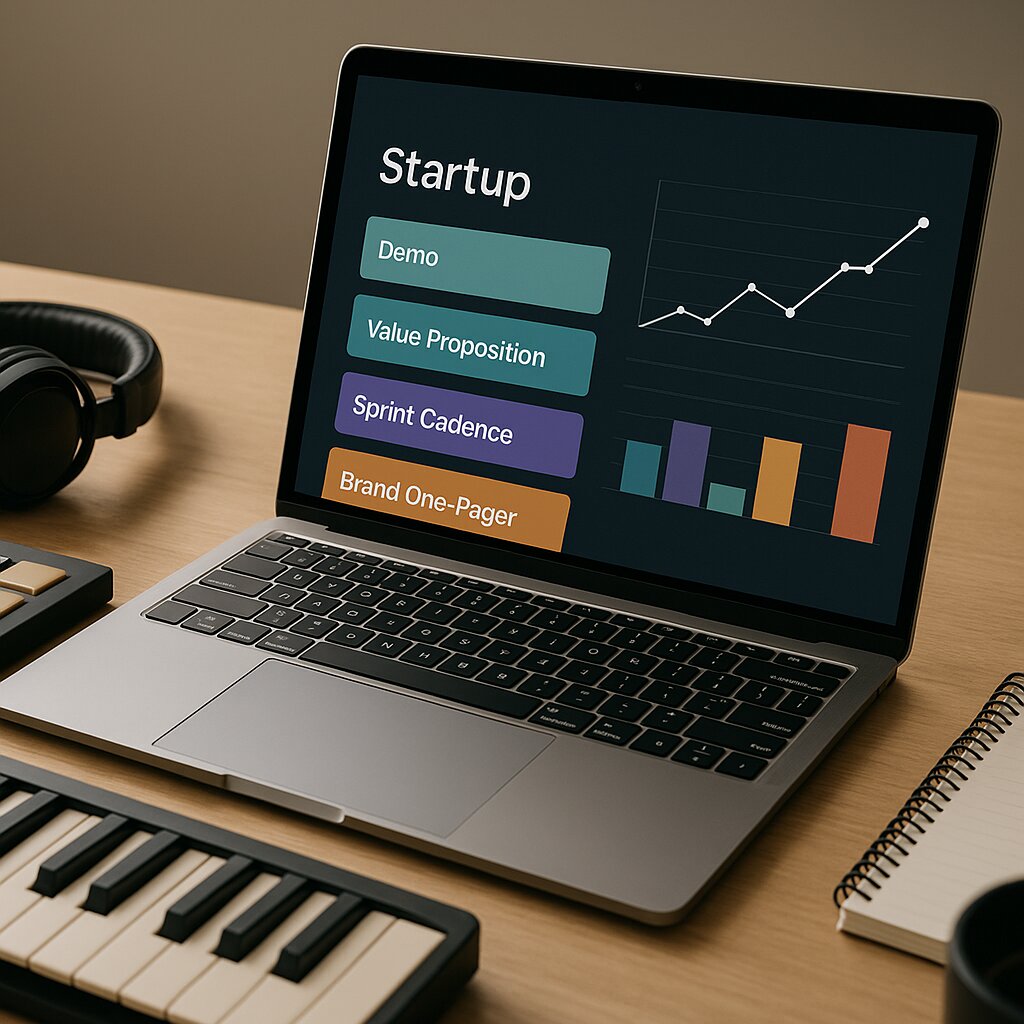
Verse, Chorus, Launch: Writing Content Like a Song
When I started my first app, I treated the homepage like a chorus and the blog like a verse. You want people to hum the melody long after they leave the room—same thing with an email, a landing page, or a long-form post. Songs teach you to respect attention: that first line is precious, the middle needs movement, and a repeatable hook makes your idea stick.
Hook: the first line
In music, the hook is often a single sentence that lives in your head all day. In content, the hook is your headline, the opening paragraph, or that first tweet. It doesn't have to be gimmicky; it has to be honest and surprising enough to tilt someone from scroll into read.
Every listener is a reader first—give them a line they want to sing back to you.
Verse: tell a story
A verse is a place to show texture. You can be precise: names, moments, small conflicts. As a founder who loves records from the 90s to now, I think in layered production—little details in the verse become ear candy in the chorus. Same with content: a specific anecdote, a tight example, a tiny diagram—these are the instruments that make the chorus land.
- Use one crisp anecdote per piece.
- Drop concrete numbers or sensory details where you can.
- Think in rhythm: short lines, then a long payoff.
Chorus: repeat the idea
Choruses are simple for a reason. They’re repeatable. Your core message should be something someone can say aloud after reading your content. If your reader can repeat that line and mean it, you’ve done your job. Repeat it, but don’t be boring—variation keeps ears happy.
Bridge: change the angle
The bridge is where you bend expectations. Maybe you reveal the trade-off, or show a failure, or offer an unusual way to use your feature. Musically, it keeps the song from looping into numbness; editorially, it gives depth and trust.
Production: ship with the right studio
All the melody and lyrics mean little if you never mix and release. In my world, that backstage studio is the Jaopaya Framework (Tech = $0)—the quiet plumbing that lets ideas become live without me spending nights wrestling infra. Think of it as the console and engineers that handle plugins, so you get to focus on songwriting—writing, refining, and sharing.
I mention the studio because creators need a build environment that disappears. When the tech is invisible, you can iterate fast: drop a verse, test the chorus, see what people sing back. The best product releases feel like surprise singles: tight, honest, and delivered on time.
Practical mix: steps I use when I write
- Draft a one-line hook. If it sings, keep it.
- Write a single anecdotal verse—small, vivid, human.
- Create a chorus that repeats the core insight in one sentence.
- Add a bridge: a counterpoint or an unexpected detail.
- Ship quickly, then iterate based on the chorus people hum back.
I like to think of content as tiny singles released from the album of a product. Some tracks flop, some become staples on playlists. That’s okay—what matters is that you keep writing, keep producing, and keep listening to real people sing along.
Mini-lesson: a tiny checklist to write like you make music
- Hook first: 1 line that could be a tweet.
- Verse next: 1 specific story or example.
- Chorus last: 1 repeatable insight you want people to say.
Ship often. Let the Jaopaya Framework be the studio humming in the background so you can focus on craft, not wiring. Write like you’re making songs—and remember: the best songs are simple enough to sing on the way home.