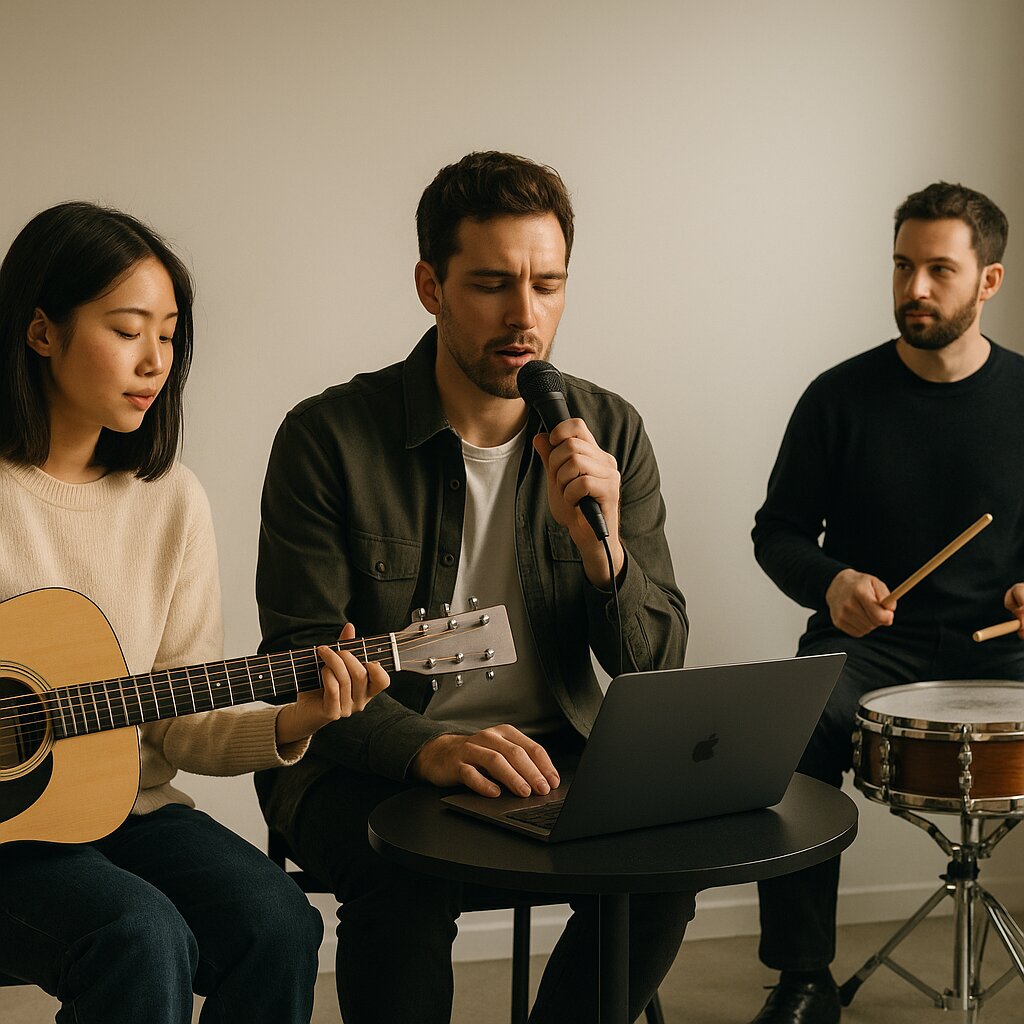
Intro: Think of your startup like a band
You don't need a stadium. You need a small, tight group writing one great song that people want to hum. Use musical ideas as a short-hand for product work: demo = demo track, MVP = rough demo, PMF = audience sing-along. This guide gives short actionable steps, checklists, and templates so you finish and actually do the work.
1) Demo (Demo Track): Quick checklist + template
Checklist
- Target listener: name and problem (1 line)
- Headline hook (10 words max)
- One-screen demo or 60s video showing the core job
- Call to action: sign up / join waitlist / book call
- Measure: CTR, signups, watch seconds
One-line demo template
For [target listener] who needs [main outcome], our [product] helps them [core benefit] in [timeframe]. Watch 60s demo here: [link].
Example
For solo podcasters who lose time editing, our app auto-cuts silences and adds a consistent voice EQ in under 2 minutes. Watch 60s demo: example.com/demo
2) Hook: the chorus that makes them hum
Hooks are short, repeatable lines that explain value fast. Treat them like a chorus you want listeners to hum back.
Checklist
- One sentence, 5-12 words
- Contains outcome or big feeling
- Easy to say aloud
- Testable in 10–30 seconds
Quick hook test ("humming PMF")
Record the hook as audio or text. Play it to 10 people in your audience. Metric: at least 3/10 repeat it verbatim or ask for more info. If none repeat, iterate.
Hook examples
"Podcast editing in 2 minutes."
"One-click invoices that get paid faster."
3) PMF in seconds: fast validation
PMF (product-market fit) is messy, but you can get quick signals.
Checklist
- Run a 60s landing page with CTA
- Traffic source: 50 targeted visitors (friends, small ads, communities)
- Track: conversion rate, time on demo, repeat requests
- Threshold signals: 5–10% signup from targeted visitors OR 10+ people asking to buy
Quick PMF test (seconds)
- Craft 10–12 word hook.
- Create 60s video or 1 image + headline landing page.
- Send to 50 relevant people; ask one simple question: "Would you try this?"
- Count enthusiastic yes replies and follow-ups within 48 hours.
4) One-day sprint: metronome sprint plan
Use a single-day sprint to get a working demo. Keep metrics simple.
Day plan (hours & metrics)
- 9:00–10:00 — Goal & quick research (metric: 3 user quotes)
- 10:00–13:00 — Build rough demo (metric: 60s demo video or clickable mock)
- 13:00–14:00 — Lunch & sync
- 14:00–16:00 — Landing page + CTA (metric: live page)
- 16:00–18:00 — Send to testers, collect responses (metric: replies count)
Checklist
- Clear north star for the day (1 sentence)
- Owner for demo, page, outreach
- Measurement plan (how many responses you need)
5) Mixdown: brand tone, color, sound, and email
Mixdown is where you balance instruments: visuals, voice, and channels.
Mixdown table (use as quick grid)
- Tone: warm, helpful
- Color: 1 primary, 2 accents
- Sound: 1 short audio hook (3–5s)
- Email voice: friendly, 2 sentences + CTA
Example mixdown
Tone: warm friend; Color: teal + soft orange; Sound: short whoosh then chime; Email: "Hey Sam — made a quick demo for solo podcasters. Want to try 2-minute editing?"
6) Messaging for featuring partners (collab lines)
Short templates to ask partners to feature or co-create.
Checklist
- One-line value for partner
- Short ask (cofeature, share, guest spot)
- Example deliverable for partner (one bullet)
Template message
"Hi [Name], love what you do. I'm building [product]. Could we co-feature: I make a short demo and you share it with your audience? I'll highlight you in the piece."
7) Funnel as a setlist: map in 5 steps
Think of each funnel stage as a song in a setlist. Each should move the listener to the next track.
Funnel setlist (simple)
- Hook: ad/post —> landing page
- Demo: 60s video —> CTA
- Convert: signup/waitlist —> onboarding email
- Engage: small task to get value in 15 minutes
- Monetize: subscription or one-time offer
Checklist
- One clear CTA per stage
- Measure drop-off rates between stages
- Optimize the weakest transition first
8) Simple copyright + recurring revenue models
Keep models tiny and clear so users understand value and you can test quickly.
Model options
- Free tier: limited weekly use — good for discovery
- Simple subscription: $5–$15/month with 7-day trial
- License per asset: one-time fee for custom exports
- Revenue share for partners: 70/30 split for referred customers
Checklist
- Choose 1 monetization path to test first
- Document copyright ownership clearly in user flow
- Measure conversion from free to paid
9) AI as a band member: practical roles
Use AI to speed tasks, not replace strategy.
Useful AI roles
- Demo editing: auto-trim and captions
- Hook generation: 20 variations to test in minutes
- Email drafts: personalize at scale
- Research: summarize competitor features
Checklist
- Validate AI output with a human check
- Keep a short prompt library for reproducibility
10) Behind-the-scenes post structure (short template)
People love process. Use this short format for social posts.
Template
- Headline: 6–8 words (what we built today)
- One-sentence challenge
- One-sentence solution + screenshot or short clip
- One-line outcome and CTA ("Try it" or "Tell us what you think")
11) Short case studies (very short, practical)
Three brief examples you can copy ideas from. Each under ~100 words.
Case A — Solo Podcaster
Built a 60s demo showing auto-editing. Shared in two Facebook groups and emailed 40 podcasters. Result: 6 signups, 3 paid trials. Lesson: short demo + direct ask beats long docs.
Case B — Local Tutor
Hook: "Grade faster in 10 minutes." Launched a one-day sprint, created a landing page, and ran three small paid ads. Result: 12 trial users, 2 subscriptions. Lesson: clear immediate outcome sells.
Case C — Niche Marketplace
Partnered with a popular newsletter for a co-feature. Provided an exclusive discount and a one-click signup. Result: 100 visits, 8 signups. Lesson: partners amplify reach when value is obvious.
12) Quick checklists & templates pack (copy and use)
Demo checklist (copy)
- Target listener line
- Headline hook (<=12 words)
- 60s demo ready
- Landing page + CTA
- Outreach to 50 people
Hook test script (copy)
"Hi, quick question: if you had a tool that [hook], would you try it?" — record the yes/no and any follow-up comment.
One-day sprint goal example
Goal: Create a 60s demo and get 10 signups from targeted podcast hosts by 6pm.
Final notes — warm, practical, repeatable
Work like a small band: rehearse fast, play for a small room, listen to reactions, iterate. Use the checklists and templates above each day. No big promises — only practical steps you can try tonight. If you want, copy the templates and run the one-day sprint this weekend.
Remember: one great short song (demo + hook + quick validation) is worth more than a long album of ideas.