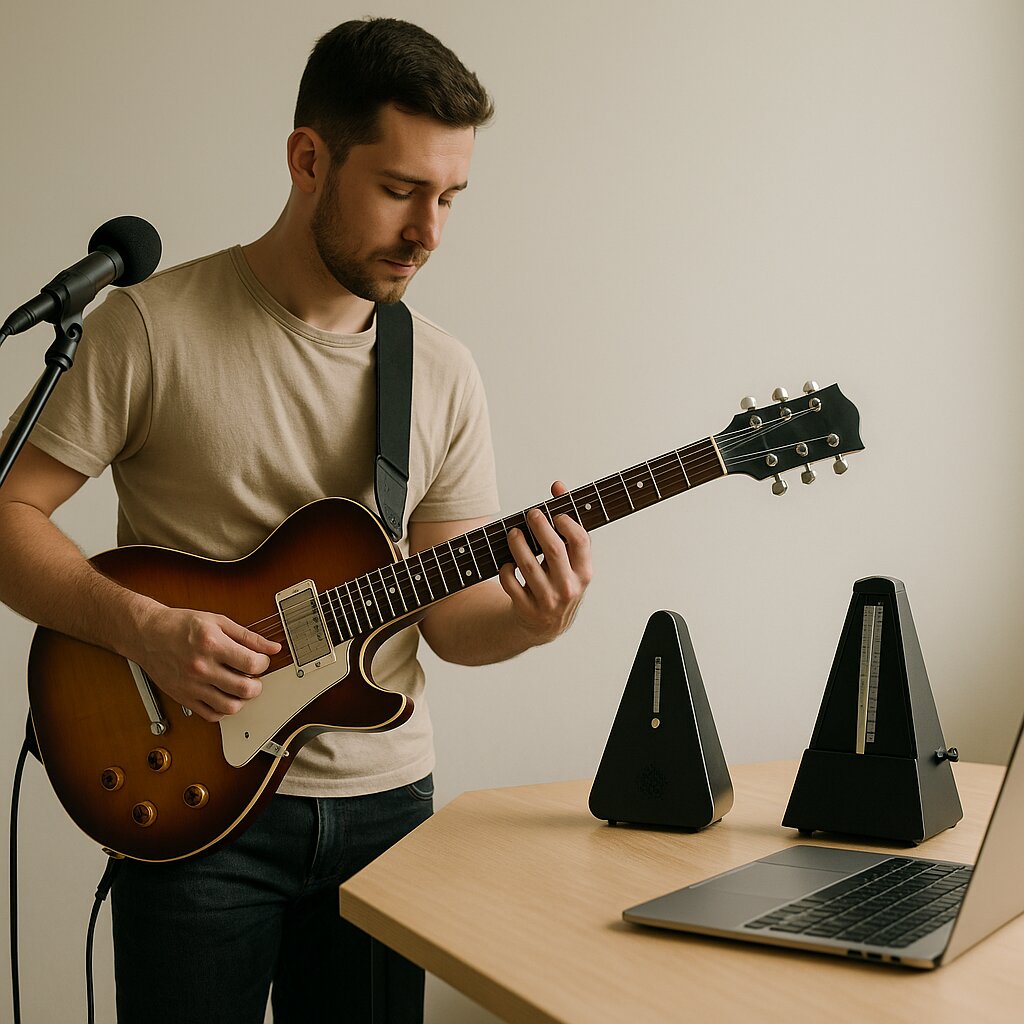
Intro: Why a Song Is the Perfect Launch Metaphor
Starting a small business is like writing a song. You begin with a simple idea, build a hook that gets people humming, create a short demo that people can feel, then iterate with your band (team, partners, users). This guide gives you a warm, practical playbook so you can stop planning and start producing a demo that sells.
Overview: What You Will Do
- Turn an idea into a short demo/MVP you can show in one week.
- Write 3 selling hooks and pick one for your landing page.
- Run a focused 5-day sprint with daily tasks and measurable outcomes.
- Test product market fit with a playful humming test and simple metrics.
- Use AI to help produce and scale, while keeping key decisions human.
Core Storyline: Main Topics
- Idea to Demo fast workflow
- Hook writing and landing page copy
- Sprint metronome and daily templates
- Metrics and expected outcomes
- Brand mixdown checklist: tone, color, voice
- Partner featuring and outreach
- Funnel as setlist: TOFU, MOFU, BOFU
- AI as a bandmate: scope and limits
- Do and Don't quick list + example hooks
1. Turn an Idea Into a Demo Fast
Goal: a listenable demo or clickable prototype that communicates value in 30 seconds. Think of it as a 30s chorus of your business.
Steps
- Clarify the single audience and single problem. Write it in one sentence: "For X who need Y, we offer Z."
- Choose the minimal supporting feature that proves value. Limit to one core promise — your hook.
- Create the demo: record a 30s audio demo, a one-minute video, or a clickable landing prototype using a builder. Keep production tiny: 1 instrument, 1 vocal phrase, simple visuals.
- Prepare a 1-line pitch and 3-second value statement for social intros.
Templates
- One-sentence pitch: For [audience] who want [outcome], [product] helps by [how].
- Demo checklist: Hook line, 30s core demo, CTA, 2 visuals, one supporting testimonial or quote.
2. Write Hooks and Landing Copy
The hook is the chorus people hum. It must be short, concrete, and repeatable.
Landing Page Sections
- Headline (hook): 6-8 words max.
- Subhead: 1 sentence that clarifies the promise.
- Demo player or embedded 30s clip.
- 3 benefits in bullet form (no jargon).
- Primary CTA: Listen, Sign Up, Try Demo.
- Secondary social proof: one partner logo or user quote.
Hook Writing Process
- Write 10 raw hooks in one sitting (no editing).
- Keep only hooks that describe a specific outcome or emotional benefit.
- Test best 3 on 10 people quickly: ask which one they remember after 1 minute.
3. Sprint Metronome: 5-Day Plan
Treat your week like a metronome. Each day has a beat you follow. Goal: ship a demo + live landing page by day 5.
Day-by-Day
- Day 1 – Compose: Clarify audience, problem, and hook. Create one-sentence pitch and sketch landing structure. Expected outcome: final hook and content brief. KPI: completion of brief.
- Day 2 – Record and Build: Produce 30s demo and build landing draft. Expected outcome: demo file and live draft page. KPI: demo uploaded, page live (yes/no).
- Day 3 – Seed Traffic: Share to small channels, friends, partners. Collect first 50 impressions. Expected outcome: 50 visitors. KPI: clicks, CTR.
- Day 4 – Test & Iterate: Run humming PMF test, collect emails, refine hook. Expected outcome: 20 email signups or 30 seconds of qualitative feedback. KPI: email signups, conversion rate.
- Day 5 – Pitch Day: Send partner outreach and run small paid test or collaborator promo. Expected outcome: 3 partner replies or 100 visitors. KPI: partner interest count, traffic uplift.
Daily Task Template
- Morning (30 min): Review last day metrics, set two outcomes for the day.
- Mid-day (2 hours): Core work block (recording, copy, page build).
- Afternoon (1 hour): Share, test, collect feedback, update tracking sheet.
- Evening (15 min): Log results, pick one tweak for next day.
4. Metrics and Expected Outcomes
Measure ruthlessly. Here are realistic early metrics and what to aim for in week one.
- Landing page CTR: 2% to 8% is healthy for early tests. Track clicks from social posts and ads.
- Email signups: 2% of visitors is a good start. Aim for 20 signups in first week as validation.
- Demo listens: 50 plays in the first week indicates initial interest.
- Partner interest: 3+ meaningful conversations in week one indicates B2B traction or collaborations.
- Retention signal: 20% of signups opening follow-up email shows interest.
Expected results are small but measurable wins. Each metric tells you whether to pivot, persist, or polish.
5. Test PMF with a Humming Test
Fast, low-cost PMF test: give people the demo and ask them to hum or sing back the one-line benefit after 10 seconds. If they can hum the idea or summarize the problem in under 5 seconds, you have resonance.
Humming Test Steps
- Play the 30s demo for a person or small group.
- Immediately ask: "Can you hum or say the promise in one sentence?"
- Time their response. Under 5 seconds is strong. 5-15 seconds is workable. Longer than 15s means unclear messaging.
6. Brand Mixdown Checklist
Treat brand like mixdown in music: balance elements so nothing fights for attention.
- Tone: warm, friendly, slightly playful.
- Color palette: 2 primary colors, 1 accent (high contrast for CTA).
- Voice: first-person plural or second-person direct (we/you), short sentences.
- Assets: demo file, short bio, 3 visuals, favicon/logo.
- Checklist: landing accessible on mobile, demo loads < 5s, CTA above the fold.
7. Featuring Partners and Outreach
Featuring partner artists or brands boosts credibility. Keep outreach short and specific.
Short Outreach Email Template
Hi [Name], I love what you do with [their thing]. I built a short demo for [audience] that helps solve [problem]. Would you be open to a 2-minute listen and a quick chat about a small feature or shoutout? Demo: [link]. Warmly, [Your name]
8. Funnel as a Setlist: TOFU, MOFU, BOFU
Think of your funnel like a gig setlist. Start broad, then bring people closer.
- TOFU (Top): Social clips, shareable 15s demo snippets, simple hook ads. KPI: impressions, CTR.
- MOFU (Middle): Landing page with 30s demo and email capture. KPI: signup rate, demo plays per visitor.
- BOFU (Bottom): Early-bird offers, partner bundles, free trials, membership invite. KPI: conversion to paid, partner signups.
9. Recurring Revenue and Fan Engagement
Monetization ideas that feel like encore tracks.
- Membership: monthly behind-the-scenes, early demos, exclusive tracks or tutorials.
- Royalties/licensing: license short audio assets or branded templates to creators.
- Merch or digital downloads: simple one-off purchases.
- Share behind-the-scenes: short clips that make fans feel like bandmates and help retention.
10. Use AI as a Bandmate
AI can speed production and scale content. Define where AI helps and what humans decide.
Give AI
- Drafts for copy, variations of hooks, short social captions.
- Audio roughs, arrangement suggestions, and quick edits.
- Automated A/B variants for landing page headlines and CTAs.
Humans Decide
- Final artistic direction, emotional judgments, brand voice, and ethical choices.
- Which partner to feature and how a collaborative relationship is framed.
11. Quick Do and Don't
- Do ship a small demo now; aim for clarity over polish.
- Do measure simple metrics daily and make one adjustment at a time.
- Don't wait for perfection or for every feature to exist.
- Don't let AI alone decide your brand taste or final hook.
Appendix: Example Hooks and How to Tune Them
Below are example hooks you can adapt. Formula: outcome + audience + timeframe or feeling.
- Hook 1: "Quickly find the perfect meal plan for your busy week." Tune: make it faster or more emotional ("stress-free" instead of "perfect").
- Hook 2: "Turn your idea into a demo in 48 hours." Tune: shorten to "Demo in 48 hours" for urgency.
- Hook 3: "Less admin, more music for independent creators." Tune: swap audience word to match your niche (photographers, podcasters).
- Hook 4: "A membership that actually gives fans backstage access." Tune: make concrete by naming one perk (early tracks, Q and A).
How to adjust hooks quickly
- Swap the audience word to test resonance. Example: creators vs independent musicians.
- Add a small timeframe or number when you can. Example: "in 3 clicks" or "under 2 minutes."
- Make it emotional: replace benefits with feelings (secure, proud, relieved).
Final Checklist Before You Ship
- One-sentence pitch written and tested.
- 30s demo uploaded and embedded on page.
- Headline hook tested on at least 10 people.
- Landing page live and mobile-optimized.
- Basic tracking in place: pageviews, clicks, email signups.
- Outreach email ready for 5 partners.
- AI tasks defined; final decisions reserved for humans.
Now: pick one hook, make a 30s demo, and push a simple landing page live. Treat this week like a quick recording session. Ship the chorus, listen to the room, then iterate. Keep the tempo steady and measurable, and let your small business become a song people want to hear.
Example Hook Bank (Use and Tweak)
- "Demo in 48 hours."
- "Turn your idea into a 30-second chorus."
- "Fans get backstage in one click."
- "Less admin, more creation."
- "Make something people hum."
Short Closing Note
Start small, measure, and iterate like a band refining a chorus. Use AI to speed production, not to replace taste. Ship your demo, test the hook (hum it back), and then invite the crowd in.